

$40 Rider Fares, $5 Driver Payouts: Why Las Vegas Uber and Lyft Drivers Are Revolting Against Rideshare Pay in 2026


Las Vegas has become one of the busiest rideshare economies in America.
Every major concert, UFC fight, NFL game, convention, nightclub event, and casino weekend floods the city with tens of thousands of riders demanding transportation at the exact same time. On paper, that should create massive income opportunities for Uber and Lyft drivers.
But in 2026, many Las Vegas drivers are saying the exact opposite is happening.
Passengers are paying more than ever for rides while drivers increasingly report earning less per trip, less per mile, and less per hour after expenses. The gap between what riders pay and what drivers actually receive has become one of the most controversial issues inside the rideshare industry.
The frustration is no longer isolated complaints on Reddit or Facebook groups. It has become a nationwide labor and compensation debate. (Reuters)
The Allegiant Stadium Example: Riders Pay Premium Prices While Drivers Receive Minimal Compensation
On May 28, 2026, following the BTS concert at Allegiant Stadium, rider screenshots showed passengers being charged elevated late-night event pricing despite drivers reporting little to no meaningful surge incentives.
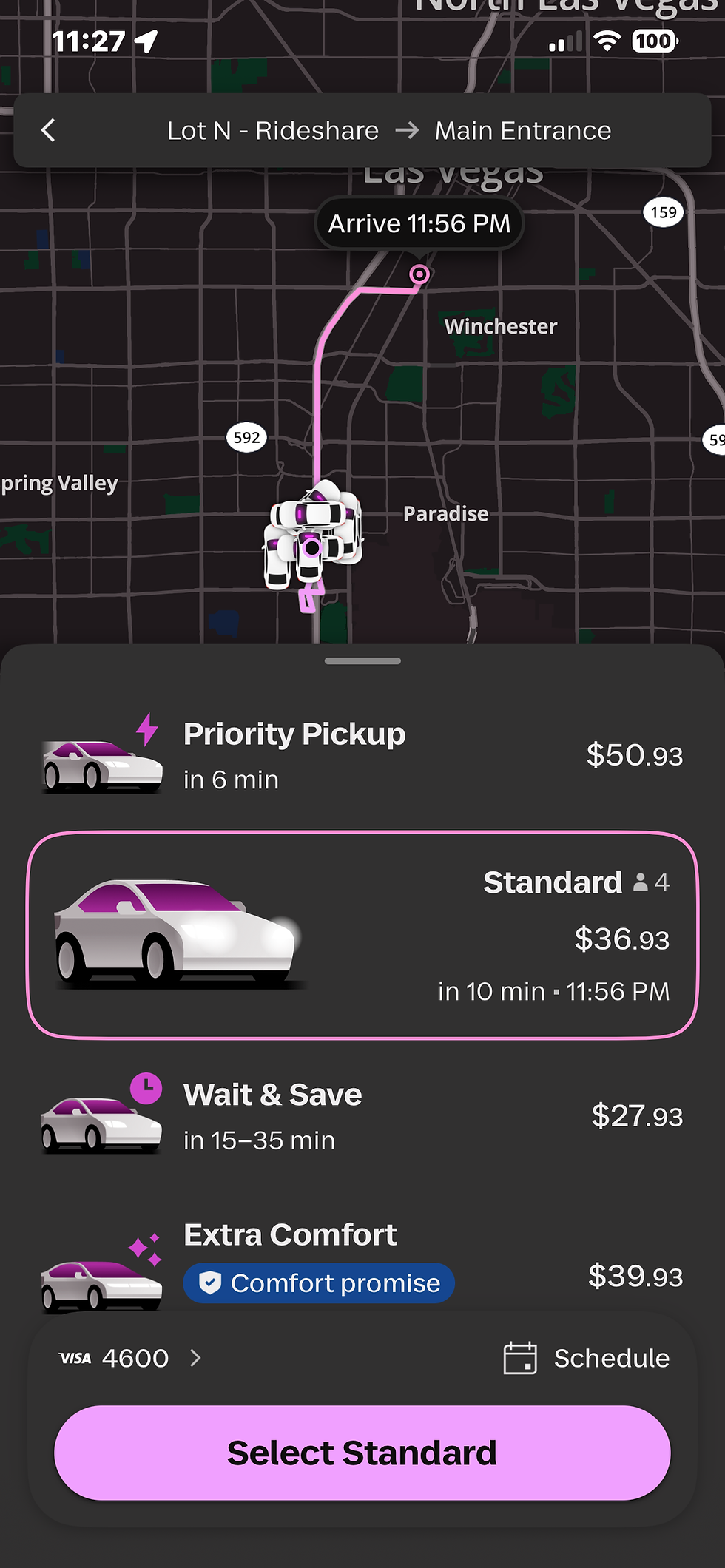


One rider traveling from Allegiant Stadium to the MGM Grand area was quoted approximately:
Standard Ride: $33.98
Priority Pickup: $42.98
Another rider traveling from Allegiant Stadium toward the STRAT area was quoted:
Standard Ride: $36.93
Priority Pickup: $50.93
Meanwhile, a separate Lyft driver request from the same event window showed a driver being offered only:
$5.01 total payout
Estimated earnings rate: $13.06/hour
Approximately 23 total driving minutes
Roughly 6.2 total miles combined pickup and trip distance
For many drivers, this is where the anger originates.
Passengers assume drivers are receiving the majority of these elevated fares. In reality, drivers often report receiving a surprisingly small percentage after platform fees, algorithmic pricing adjustments, external fees, and operating costs are deducted.
The Real Problem: Riders and Drivers Are Both Losing
The modern rideshare model increasingly creates tension on both sides of the transaction.
Riders feel:
Prices are dramatically higher than pre-pandemic years
Event transportation has become extremely expensive
Surge pricing appears inconsistent and unpredictable
Short rides can now cost $25–$50+
Drivers feel:
Base pay continues falling
Surge bonuses are weaker or disappearing entirely
Long pickup distances are unpaid
Vehicle expenses continue skyrocketing
Platforms manipulate acceptance incentives
Algorithms prioritize corporate margins over driver profitability
According to Business Insider, average Uber and Lyft ride costs increased nearly 10% year-over-year, with average trip prices rising from $21.58 to $23.66 nationally. Meanwhile, platform fees reportedly increased by roughly 33%, substantially outpacing driver pay growth. (Business Insider)
That is the core issue.
Consumers are paying more.Drivers are not meaningfully benefiting.
How Much Do Uber and Lyft Drivers Actually Make in 2026?
The answer depends heavily on:
City
Demand
Time of day
Vehicle type
Tips
Bonuses
Fuel costs
Driver strategy
But broader 2026 industry data paints a concerning picture.
National 2026 Driver Pay Estimates
Industry research and driver-tracking platforms estimate:
Metric | Uber | Lyft |
Gross Hourly Earnings | $21–$26/hr | $19–$24/hr |
Net Hourly Earnings After Expenses | $10–$14/hr | $12–$22/hr |
Average Per Ride Earnings | $8–$15 | $8–$12 |
Average Driver Share of Fare | Often 40–70% depending on market | Often 30–60% depending on market |
(Gridwise)
The key phrase is “after expenses.”
Drivers are independent contractors, meaning they absorb:
Gas
Tires
Oil changes
Brakes
Commercial insurance gaps
Car washes
Depreciation
Self-employment taxes
Dead mileage between rides
Unpaid waiting time
Once these costs are factored in, many drivers report earning wages comparable to — or below — traditional hourly jobs.
A widely discussed MIT-related analysis circulating again in 2026 estimated many Uber and Lyft drivers earn below minimum wage after expenses are fully accounted for. (Reddit)
The “Take Rate” Controversy
Why Uber and Lyft Drivers Are Revolting Against Rideshare Pay
One of the biggest disputes in rideshare today involves platform “take rates” — the percentage of rider payments retained by Uber or Lyft.
Uber and Lyft publicly frame compensation structures differently depending on:
Region
Fees
Insurance
Booking charges
Upfront pricing
Local regulations
But many drivers claim the effective corporate share regularly reaches 50–70% on certain trips.
Independent analyses and driver reports increasingly support that claim in some markets. (RideWise)
Drivers across forums routinely post examples where:
Passenger pays $40
Driver receives $12–$18
Or:
Passenger pays $70+
Driver receives under $20
That disparity creates enormous resentment because the driver is supplying:
The vehicle
Fuel
Insurance
Labor
Risk exposure
Maintenance
Time
While the platform controls:
Pricing
Algorithms
Visibility
Trip assignment
Rider demand access
Las Vegas Drivers Face Unique Economic Pressure

Las Vegas is especially brutal for rideshare economics because of how the city operates.
1. Heavy Event Traffic
Drivers routinely sit in:
Strip congestion
Stadium exits
Casino pickup lines
Convention bottlenecks
A 10-minute ride can consume 40+ minutes total.
2. Extreme Vehicle Wear
Las Vegas driving conditions are punishing:
Intense summer heat
Constant stop-and-go traffic
High idle time
Accelerated tire degradation
Increased AC usage
Rapid depreciation
3. Tourism-Dependent Income Volatility
Driver earnings fluctuate heavily based on:
Conventions
Concert schedules
Holidays
Sports events
Tourism cycles
One slow week can destroy profitability.
4. Oversaturation of Drivers
As pay decreases, platforms onboard more drivers to maintain ride availability, creating:
Longer wait times between rides
Lower ride frequency
Reduced surge opportunities
Increased driver competition
This weakens pricing power for existing drivers.
Why Drivers Are Increasingly Rejecting Trips
Drivers are becoming more selective because many rides simply no longer make economic sense.
This has led to:
High cancellation rates
Cherry-picking rides
Multi-app driving
Declining short rides
Refusing stadium pickups
Avoiding low-paying airport runs
Drivers call this “decline and recline.”
They are no longer blindly accepting every trip because the math often becomes unprofitable after expenses. (Business Insider)
The Independent Contractor Debate
Uber and Lyft classify drivers as independent contractors rather than employees.
That classification allows the companies to avoid:
Overtime
Health insurance
Unemployment insurance
Workers compensation
Paid leave
Retirement contributions
At the same time, drivers have limited control over:
Pricing
Customer acquisition
Dispatch systems
Platform access
This creates a hybrid structure where drivers carry most operating risk without receiving many protections associated with traditional employment.
That issue is now becoming a major political and labor battle nationwide. (Reuters)
What Would a Fairer System Look Like?
The rideshare model itself is not broken.
The compensation structure is.
A sustainable future for rideshare requires a realignment between:
Platform profitability
Rider affordability
Driver sustainability
Potential Solutions
1. Guaranteed Minimum Driver Share
Drivers should receive:
A guaranteed percentage of every rider fare
Transparent payout calculations
Full fare visibility before acceptance
Many drivers argue the minimum should be:
70–80% of passenger fare after taxes/tolls
2. Event Surge Transparency
If passengers are paying event pricing:
Drivers should directly participate in those premiums
Stadium and concert pricing should be transparent
3. Paid Pickup Miles
Drivers should be compensated for:
Long pickup distances
Traffic delays
Stadium queue time
4. Regional Driver Cooperatives
Las Vegas drivers could potentially organize:
Local driver alliances
Cooperative rideshare networks
Independent booking systems
Direct-to-consumer transportation marketplaces
This would reduce reliance on centralized algorithmic pricing systems.
5. Government Regulation
Possible reforms include:
Minimum earnings floors
Mileage reimbursement standards
Transparent fee disclosures
Portable benefits systems
Collective bargaining rights
Massachusetts recently became the first state to formally recognize a rideshare drivers union structure. (Reuters)
Final Thoughts
The rideshare economy helped reshape urban transportation over the past decade.
But in 2026, many Las Vegas drivers believe the economics have shifted too far in favor of platform profitability while the workers powering the system absorb increasing financial pressure.
Passengers are paying premium prices.Drivers are carrying premium expenses.Yet many drivers say they are earning less than ever.
That imbalance is becoming impossible to ignore.
The future of rideshare will ultimately depend on whether Uber and Lyft can rebuild trust with the very workforce that keeps the platforms operating every single night across cities like Las Vegas.
Get TripTips App Updates:
New app features,
Official launch date,
New businesses listed


Comments